Debenham Sisters
Betty and Nancy Debenham, with their dog, Poncho, were keen motorcyclists. Nancy won a Gold Medal at Brooklands in 1926.
The Debenham Sisters

Vintage French Motorcycles
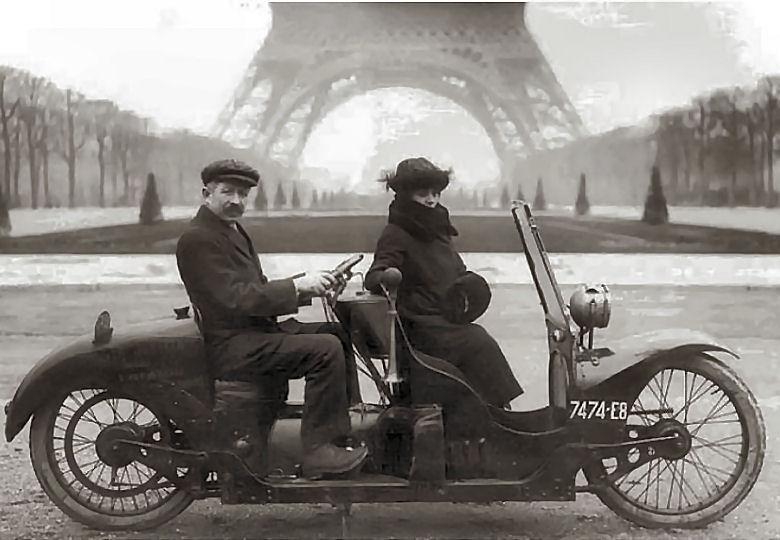
Paris
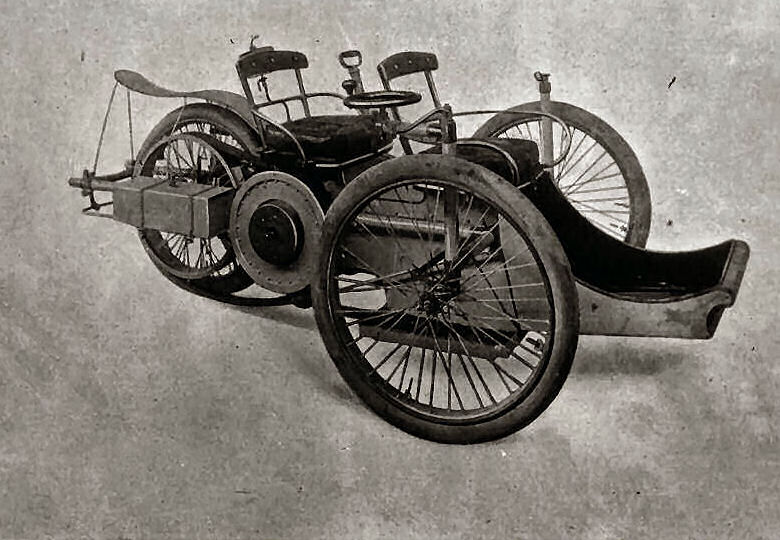
Veteran French Tricycle
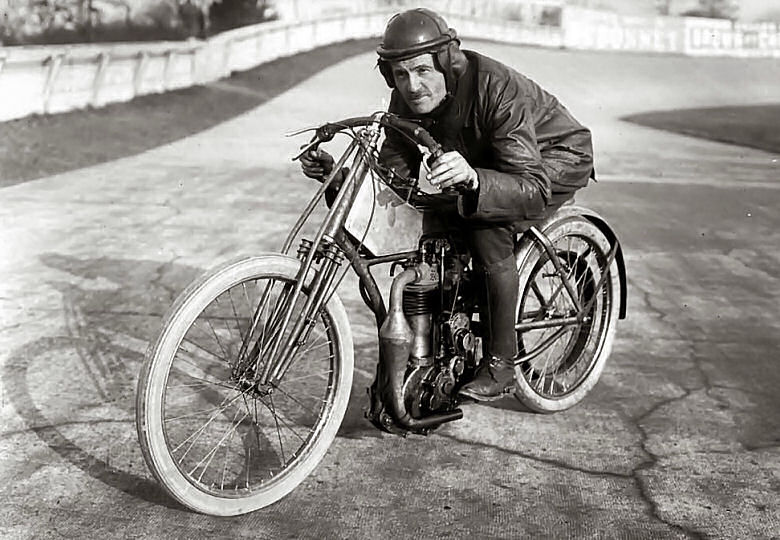
M. Lombard
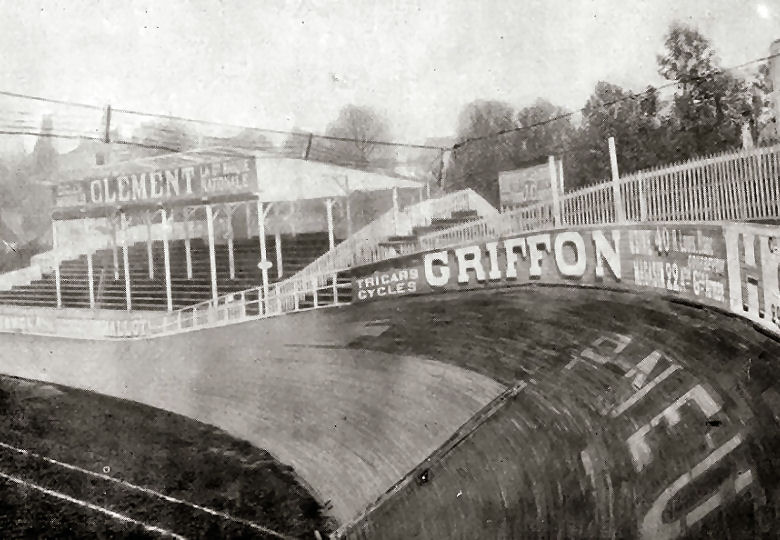
French Boardtrack
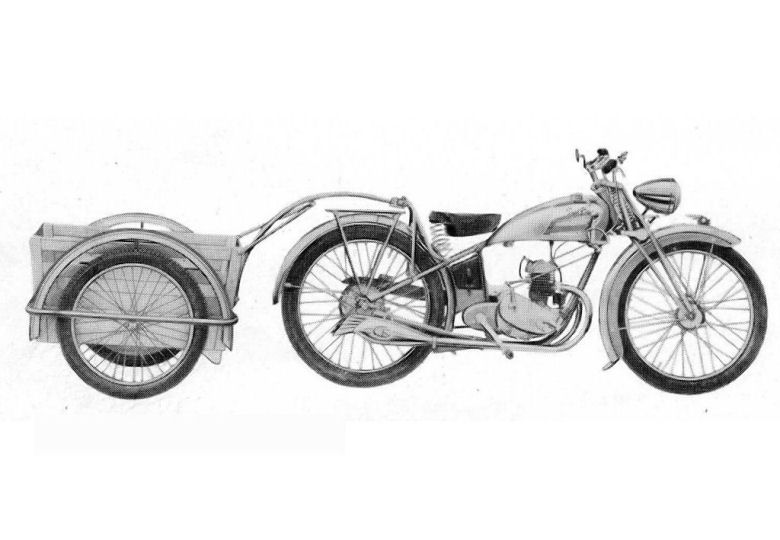
Motorcycle and Trailer
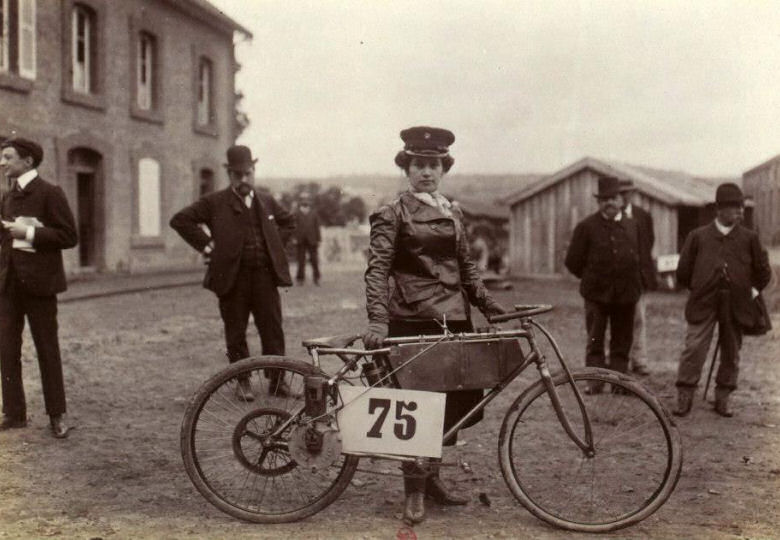
Famous French Racer
This page lists brands for which we currently have only an historical precis.
For a more complete listing visit the French Index.
There is also a page on really obscure French brands.
Sachs-Nauder 1981~1986
Sadem
Ets. Sadem of Bois-Colombes built 98cc lightweight motorcycles from 1951 to 1954
Source: Wikipedia NL
Salmson Mopeds 1950s
Salvator
1901
Bicyclette with Gillet engine and pedals. The same firm produced the Saltor.
Bourdache p112, 113.
Sambiase
Built in Marseille by the Sambiase brothers from 1985, these were high-performance machines using alloy frames and Kawasaki engines.
They had previously built frames for Gabrel Grabia and for the 250 Pernod which won the British Grand Prix with Jacques Bolle in 1983.
It has been suggested that the Sambiase was inspired by Claude Fior's designs. The result was the Ninja Kawasaki-powered machine, with the alternator moved to the rear in order to diminish the width. Handling was apparently superb, and dry weight was down to 160kg.
Source: Moto-Histo.com
Sanchis 1906~1912
Sanchoc
Motos Sanchoc of Paris built motorcycles using two-stroke engines of 98cc to 248cc and sidevalves of 345cc from 1922 to 1924.
Sources: Wikipedia NL, archives-moto.jlbweb.fr.
Sandford 1920s-1930s
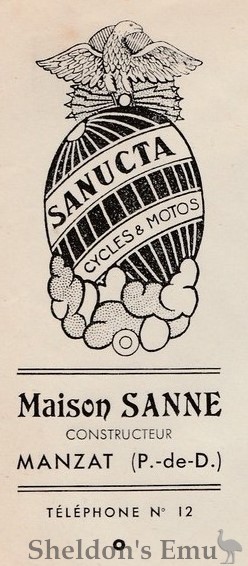
Sanucta
Also known as Sanne, these were built by Manzat (P.-de-D.) in the 1930s.
Sartorette 1952~56
Sautel et Sechaud 1902-1904
Le Sauvage 1956-1958
Savard
Two-wheel-drive motorcycle built by the the Savard twins Frank and Patrick from 1987 with financial support from the French government for their Pro Top company. The Savard machines competed in beach races and supermotard, placing well. Driven by chain, the front wheel drive only engaged when the rear wheel lost traction. The name changed to Savage in 1990, but vanished the following year.
Engines employed included Honda CR500, Husky 510 and Yamaha TT600.
Source: Wikipedia NL
Savariaux
Possibly associated with La Tortue
Bourdache p146
Saving
1906. Brand with the same construction as Alcyon using Zedel engines renamed Kleder in the catalogue. It appears that these were in fact older model Alcyon machines.
Bourdache pp279, 378
Savoye et Cie
Established in 1905 at Saint-Chamond (Loire), the firm used the Keller Dorian engine in 1908. It is not clear whether they used their own name as the brand, but they were certainly marketed as Pernot
Sbarro
Manufactured by ESPERA Sbarro in Montbéliard, France, less than 20km from the Swiss border.
Franco Sbarro, from southern Italy, is famed for his exotic sports cars. His first love was motorcycles, and in 1989 he built a quite remarkable machine.
Source: moto-collection.org, e-sbarro.fr
Schneider
1902. Motorcycle engine placed along the rear wheel - gear transmission
Schneider built his own carburettors.
Bourdache p149
Scoto 1949-1950
Scooter-Valise FR
Manufactured by Ets Francois in 1952, it was powered by a 72cc Sotecma engine and weighed a mere 27 kg.
See also F.R.
Source: Tous les scooters du monde
S.C.L.
Société Anonyme Nouvelles des Constructions de la Loire
Rue Parmentier, St Etienne
Similar catalogue to that of Automoto circa 1913
Bourdache p441
Scotta
A motorcycle/scooter hybrid with scooter wheels powered by a 125cc JLO engine, built 1952 to 1953.
Source: Wikipedia NL
Secma
Manufactured by SECMA (Société d'Etude et de Construction de Mecanique Automobile) in Aniche, about 50km south of Lille. The company was founded by Daniel Renard, who had previously run the ERAD microcar firm.
Secma produced a range of microcars including the "Fun Tech"" 3-wheeler which was sold in the UK as the QPod.
Sources: secma-performance.fr, en.wikipedia.org.
Selection
Manufactured by Selection Cycles of Paris, an upmarket bicycle manufacturer, the cyclomotors (the term "moped" was not yet in common use) were powered by Le Poulain two-stroke engines.
Five of these were found in a Paris warehouse in 2006, brand new, in storage since a Paris shop had taken delivery of them in 1952 shortly before closing down.
Gallery: Selection
Source: buyvintage.com
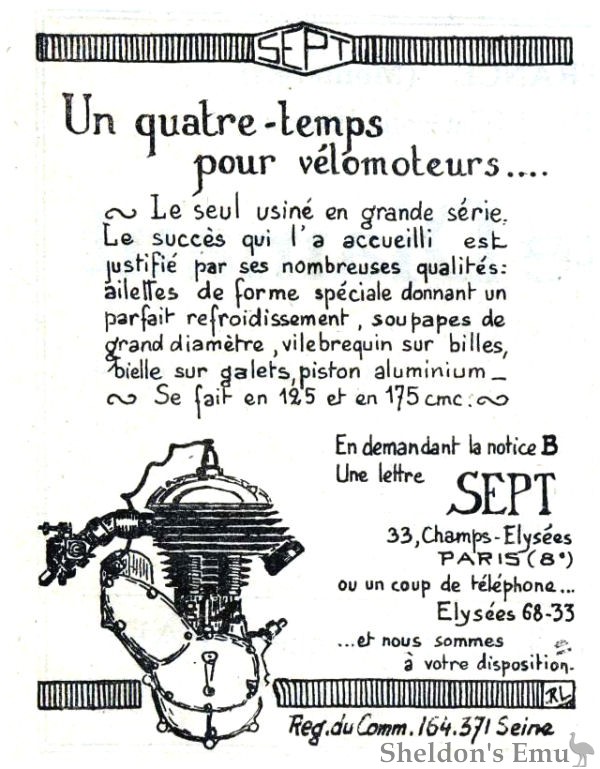
SEPT
33, Champs-Elysees, Paris (8)
An advertisment dated 1923 promotes four-stroke engines of 125cc and 175cc using aluminium pistons, with an image of a sidevalve engine.
SER 1955-1958
Serin
Manufactured in 1899 by Pierre Serin, 79, rue de Paris, Saint-Ouen (Seine)
The tricycle had a single wheel at the rear powered by a 4CV four-stroke engine and a very large external flywheel. The front wheels pivoted automotive-style and were steered via a straight lever or optionally a handlebar. There are two brakes, one at the front, the other at the rear. It had two speeds and neutral, could achieve 30 km/h, and was priced at 3500 francs.
Source: lestricars.es.tl
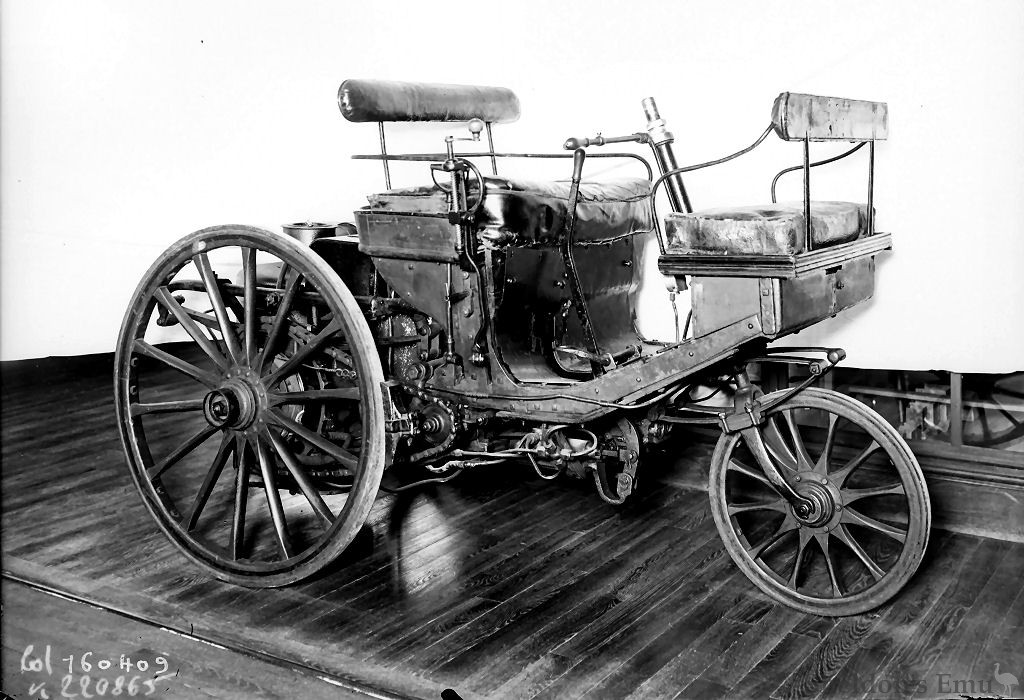
Serpollet
In 1889, Armand Peugeot, who believed in the future of the motor vehicle, built a steam tricycle which was in fact a modified Serpollet. In the fourth machine, he changed from steam to the Daimler engine.
Bourdache pp 131, 165.
Serrus
Address: 14, rue du Général Haxo, Epinal (Lorraine)
Established 1922 or earlier, in 1926 advertised that they manufactured Cycles and Motocyclettes. The firm was still operating in 1947, and was probably still producing bicycles in 1951.
S.E.T.A.M. (Baby Star)
Seurat
Marcel Seurat built a high performance motorcycle using a pair of OSSA 250cc engines on a common crankcase. Only two were built, of which one survives. The names OSSA Yankee and Jacky Doubre are closely associated with the marque.
See also BPS, Royal Moto (1970s) and SPQ
Source: OTTW
Sewa see Jeunet
S.F. by Heck 1902
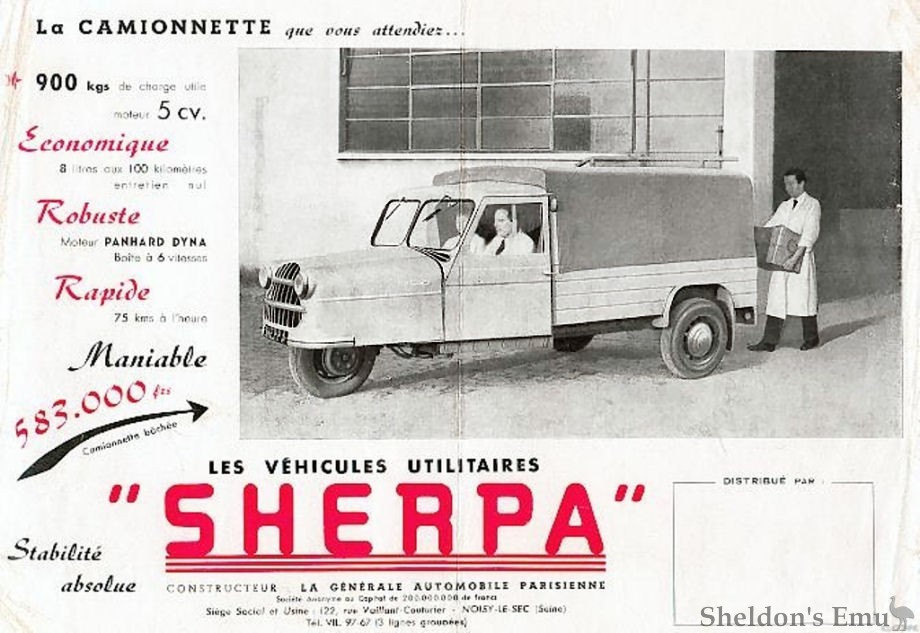
Sherpa Camionette
Three-wheeled van with tray. Panhard Dyna 851cc Engine mounted above front wheel.
Built in Noisy le Sec by Générale Automobile Parisienne (GAP), 1956.
Source: panhard-racing-team.fr
S.I.C. 1921-1925
SIF
see F. Simon
Simonet
Simonet - Ch. Simonet, Cycles & Autos, rue Juge 23, Paris. c.1903. These are possibly rebadged Valter machines. Charles-François Simonet had a bicycle workshop in rue Juge (Paris XV). His brother Alexandre, also a keen cyclist, had a workshop nearby.
Source: lestricars.es.tl
Siphax
Manufactured by Atéliers de Mécanique Siphax in Paris from 1951 to 1956, these were lightweight sport roadsters with 98cc AMC engines.
Source: Wikipedia NL
Smart
Motorcycles manufactured by Les Atéliers de Sedan of 55-57, Quai de la Tournelle, Paris, from 1922 to 1927, using 2hp two-stroke engines possibly of their own manufacture. They claimed to build 100 machines per day.
N.B. There was also a Smart built in Austria, see Smart (AT)
Sources: period literature, et al.
Societe Mecanique 1903
S.O.C.O.M.I.A.
67 Rue Lamartine, Drancy (Seine)
In 1951 they built 60cc and 72cc machines
La Moto Francaise.
Socvel 1951~1954
Solano (Engines)
R.Poisson, 6 rue Chartran, Neuilly (seine)
Built engines in 1953-54 of types S1 and S2, 49.9 and 49.8 cc. The engine was used by BGA of Saint-Etienne in those years.
Source: La Moto Francaise
Soltner
Victor Soltner of Pfastatt in Alsace began building his own motorcycle in the late 1930s. The machine was fitted with a 250cc two-stroke HO twin with separate gearbox and chain drive to the rear wheel. The chassis had telescopic forks and a rigid rear end.
Victor was the mechanic for the Mulhouse motoball club. He built the flat-twin engine using 125cc Peugeot pistons, and everything else - crankshaft, conrods, casings - he made himself. He patented the design in 1951, completed and registered it in 1952. The Soltner was restored in recent times.
Source: lalsace.fr

Soncin 1900~07
Souriau
Manufactured by A. Souriau et Cie of Montoire-sur-le-Loir, 1912 to 1914.
The company built Delta style motor-tricycles (Dreiräder). The front wheel was driven by a 625cc engine which was mounted behind it. Another version had a four cylinder engine of 1465cc.
The firm also marketed vehicles under the "Obus" marque, 1907 to 1908.
Sources: 3-wheelers.com, Wikipedia DE, et al
Souvairan
Displayed at the Salon of 1902
Bourdache p146
Spada
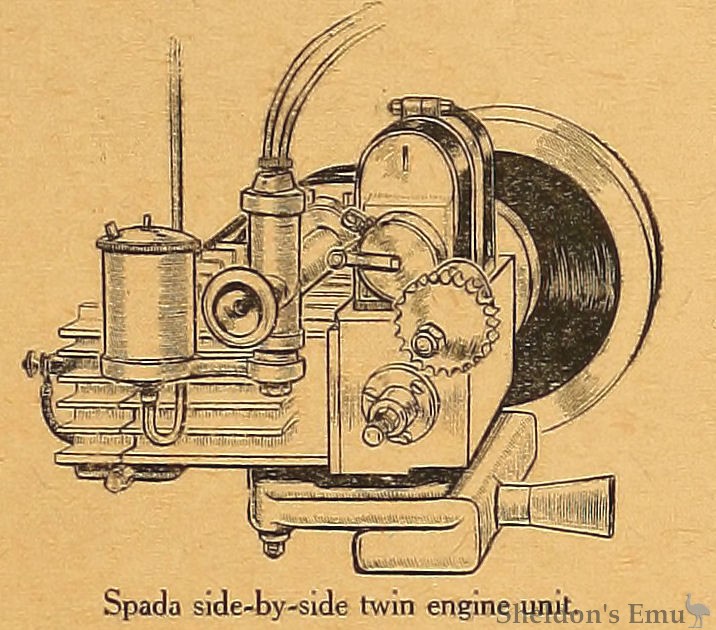
An open frame miniature, resembling the Skootamota, but with its power unit immediately in front of the rear wheel. This is a side-by-side twin two-stroke, embodying reduction gear and driving the small rear wheel by chain. The cylinder dimensions are 44x49 mm.
Paris Salon, 1922
Sparting 1930s~1950s
Sphinx Engines 1899
Sphinx Cyclecars
F. Terrier of Courbevoie, Seine built cyclecars between 1912 and 1925.
Sphinx Automobiles Usines Perfecto 1920-1925
Sphinx-Globe Automobilettes of 1913 had J.A.P. twins and Anzani single-cylinder engines.
Sources: de.wikipedia.org/wiki/Sphinx_Automobiles, allcarindex.com
Sphinx 1933~1939
Le Stabylcar
Le Stabylcar
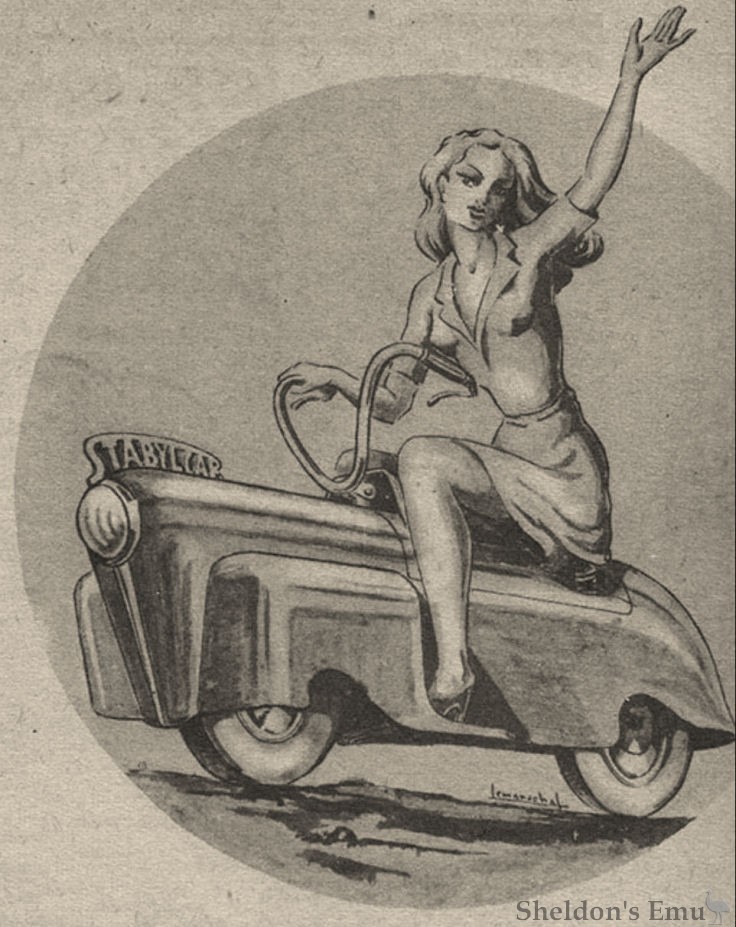
Breveté S.G.D.G. et Marque Déposée Il s'agit d'un véhicule dérivant du Scooter et de la motocyclette, d'une stabilité inconnue jusqu'à ce jour, assurant un confort remarquable joint présentation que. très à une esthéti
Conception et réalisation 100 % françaises du premier véhicule à deux roues, à traction avant, boîte silencieuse progressive, suspension amortie avant et arrière.
Il est pourvu d'un guidon inclinable et antivol.
Ce prototype vient de terminer des essais de stabilité qui ont donné entière satisfaction à son inventeur, M. Alfred Tholat. 62, avenue des Minimes, à Vincennes.
Patented S.G.D.G. and Registered Trademark
This is a vehicle derived from the scooter and the motorcycle, with unprecedented stability, ensuring remarkable comfort combined with a very attractive design.
Design and manufacture: 100% French, the first two-wheeled vehicle with front-wheel drive, a progressive silent gearbox, and front and rear suspension. It is equipped with adjustable and anti-theft handlebars. This prototype has just completed stability tests that fully satisfied its inventor, Mr. Alfred Tholat, 62, avenue des Minimes, Vincennes.
1947 Salon de la Motocyclette, Moto Revue. Courtesy Memoire du Cycle.
Star-Fling
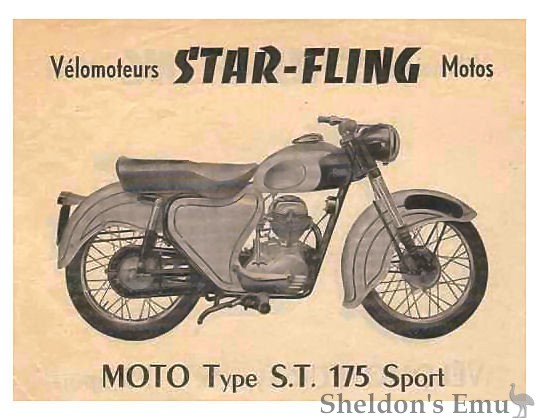
Models ST125 & ST175, circa 1955, AMC engines.
The S.T. 175 Sport was quite striking, with extensive contoured bodywork and deeply flared mudguards. It had a dual seat, rear swinging arm and telescopic front suspension.
Stimula 1902-1914
Strock
20 bld du Port Amiens
Cycles and Motorcycles. 1903
Bourdache p441
Sublime
350cc parallel twins built by André Lemardelé and Marcel Perrin 1946-1947.
Sublime 350cc Twin
Cette belle machine, exposée au Salon, sous-sol A, stand 19, a été encore perfectionnée depuis sa présentation. Le stade demise au point est terminé et la fabrication en série va enfin entrer dans une phase active.
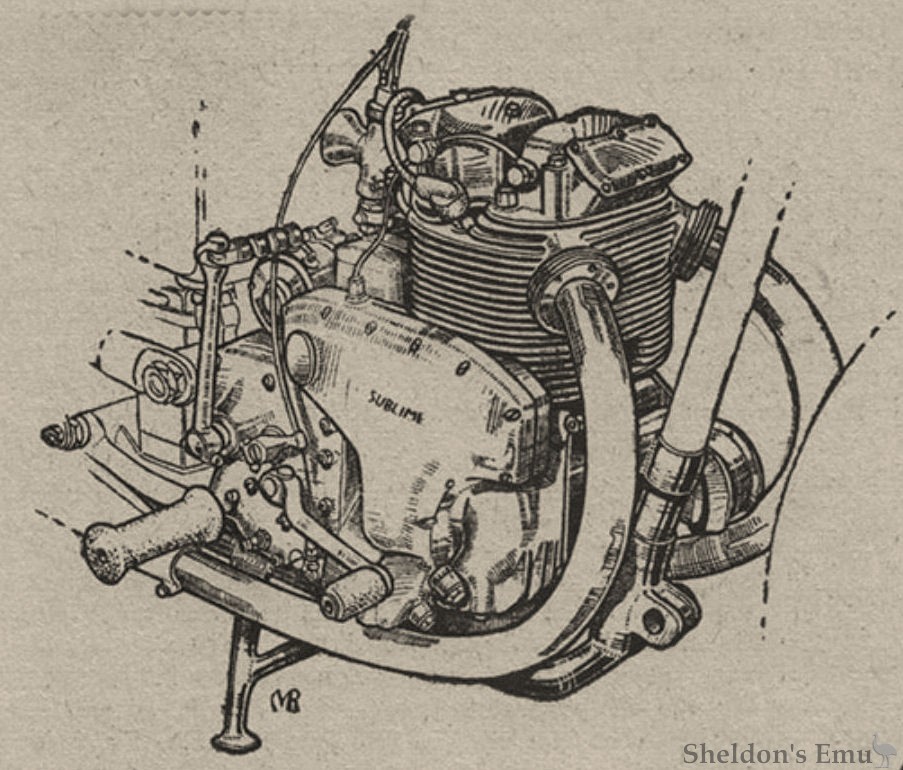
Ci-dessus et à gauche: deux vues du bloc moteur, montrant, outre l'allure géné. rale que tous nos lecteurs connaissent déjà, deux perfectionnements : des couvercles de boîtiers de culbuteurs ont remplacé les bouchons vissés: l'accessibilité et la facilité de réglage s'en trouvent accrus. De plus, le carter gauche a gagné en simplicité et en netteté. La ligne est plus sobre, et le nettoyage plus simple.
Le réservoir est également modifié : un grand couvercle, ne faisant pas saillie, cache le bouchon de remplissage. Une serrure est prévue pour éviter le vol de carburant. Les grippe-genoux sont encastrés dans les panneaux latéraux. Le décor reste le même, chrome et or.
Voici la suspension arrière, réunissant les avantages du système télescopique et de la fourche articulée. Une telle solution donne donc un confort parfait, en même temps qu'une grande rigidité latérale: l'axe, ainsi, n'a pas a effectuer un travail anormal. Remarquez, sur la partie supérieure des coulisseaux, les boutons de réglage de la suspension : des repères permettent de synchroniser les réglages droit et gauche.
La fourche télescopique, d'un dessin très sobre, comporte des amortisseurs hydrauliques réglables. Le phare est encastré dans un capotage portant à sa partie supérieure le compteur de vitesse. On remarque le frein à segments centraux, en alliage léger, généreusement refroldi par de nombreuses ailettes.
This beautiful machine, on display at the show, basement A, stand 19, has been further refined since its presentation. The development phase is complete and series production is finally entering an active phase.
Above and to the left: two views of the engine block, showing, in addition to the general appearance that all our readers are already familiar with, two improvements: rocker arm covers have replaced the screw-on plugs, increasing accessibility and ease of adjustment. Furthermore, the left crankcase has become simpler and cleaner. The lines are more understated, and cleaning is easier.
The fuel tank has also been modified: a large, flush cover conceals the filler cap. A lock is included to prevent fuel theft. The knee grips are recessed into the side panels. The chrome and gold trim remains the same.
Here is the rear suspension, combining the advantages of a telescopic system and an articulated fork. This solution provides perfect comfort along with excellent lateral rigidity: the axle, therefore, does not have to perform abnormal work. Note the suspension adjustment knobs on the upper part of the sliders: markings allow you to synchronize the right and left settings.
The telescopic fork, with its very simple design, features adjustable hydraulic shock absorbers. The headlight is recessed into a fairing that also houses the speedometer at its top. The central segment brake, made of lightweight alloy and generously cooled by numerous fins, is a notable feature.
1947 Salon de la Motocyclette, Moto Revue.
Sources: moto-collection.org; Memoire du Cycle.
Succès
Built motorcycles in 1904 with
P.A.L. engines of 2½ hp or 3 hp.
Bourdache p441
Superior
Thimonier et Cie, producer of sewing machines in Lyon. Marketed the Deronziere under their own label c1910
Supplexa 1922-1932
Suquet
Manufactured by Ets. Suquet Frères of Courbevoie, 1929 - 1934.
Built lightweight motorcycles using 98 and 124 cc Aubier & Dunne engines. It is possible they also built engines - see S.I.C.
Source: Wikipedia NL
Suzy
Manufactured by Motos Suzy of Levallois, 1932 - 1933, these were motorcycles with 498cc OHC Chaise engines.
Source: Wikipedia NL
Suddard
Documented in 1903
Bourdache p441
Sutter
Auguste Sutter established his business in 1897 and was part of a group of arms manufacturers in Châtellerault. His factory was located on Rue de l'Angelarde and produced bicycles, mopeds, and motorcycles in the 1920s. In 1926 he was a Triumph dealer, and sold a Ravat 175 B1 rebadged as A.S. Later he marketed mopeds powered by ABG VAP engines branded A Sutter. A restored 1928 motorcycle is pictured at lanouvellerepublique.fr.
There was another AS, a cyclecar built in France between 1924 and 1928 by Automóviles Serrano of Bilbao, a small 4-wheeler powered by engines from Chapuis-Dornier, Ruby, CIME and others.
Sources: Autopasion18.com; farben-schiessl.de; icenicam.org.uk; et al.
Sylvania
S.C.M.S.
77 Av A-Briand, Cachan (Seine)
Built 98cc and 175cc two-strokes in 1955.
La Moto Francaise
Rarer French Marques